
Blinkblade build: Tempo skirmisher
A practical Blinkblade build framework: role, turn planning, equipment priorities, perk choices and common mistakes.
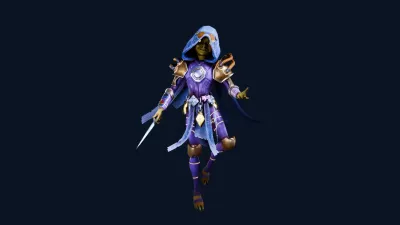
What is this build trying to do?
Favor a useful slow action alongside each fast attack plan. Select mobility that ends in cover, and use fast rounds when an early kill prevents an enemy turn. Reserve an exit route before committing to several attacks.
This is a role-based strategy framework. It does not claim to be a verified level-by-level digital card, equipment or perk list. Check the current digital card text before making an irreversible selection.
How do you set up a repeatable turn?
- Choose a slow round where preparation will not leave an ally unsupported.
- Spend the resulting tempo on a fast turn that removes a threat before it acts.
- Move out of the remaining threat zone and check the next slow turn before ending.
Treat a quiet round as preparation for the next engagement. Enter danger late when enemies have already acted, then use a fast turn to attack and leave. The strongest sequence is one you can afford twice, rather than a spectacular opener with no safe follow-up.
Which cards should you prioritize?
Bring a fast payoff, a useful slow action and a retreat route in each rest cycle. Inspect Double Time when pursuing repeated fast effects: official digital notes confirm that it doubles fast effects in fast state. Reverse the Flow is a confirmed teleport-related option, but a destination occupied by another figure is illegal. Keep a cheaper sequence for rounds where you cannot afford the desired fast chain.
Compare a candidate card against the job your current hand cannot accomplish: reaching a useful hex, making the primary attack legal, surviving the next enemy action or recovering a disrupted turn. Avoid upgrading a number while losing the only action that keeps the sequence reliable. Exact level selections remain subject to digital Codex verification.
How should equipment and perks support the plan?
Initiative adjustment is valuable when it changes whether you kill or escape before an enemy acts. Movement equipment should support the exit as well as the approach. For a repeated-attack turn, verify whether an offensive item affects one attack, an action or a whole turn.
Assess time-token economy before pure modifier damage. A perk that reduces a wasted slow round can improve several later turns. Revitalize and Headstart appear in digital notes, but their complete current text should be read before committing the build around either.
What should you change when the plan fails?
Do not copy a tabletop card screenshot without checking the selected card-layout option. The digital update adds an original-board-game layout setting, so confirm which fast and slow effect you are actually activating.
Identify whether the failure was positioning, timing, a resource shortage or a party mismatch before replacing the entire hand. Record a change and test it over another expedition rather than changing several decisions at once.
Which references help with this build?
Start with the Blinkblade class reference, use party composition to assign allies’ roles, and revisit card economy when the party exhausts before completing its objective.
Evidence boundary: Digital starter identity verified; strategy is editorial and tabletop-informed, not a tested 1.0 card list.
Sources and version notes
Researched on October 16, 2026 for the digital edition. Strategic recommendations are editorial advice; they are not represented as hands-on testing. Refer to current in-game tooltips when a patch changes an interaction.
- Frosthaven Steam store — Digital: release date, six starters, co-op, outpost and combat overview
- Official Frosthaven game website — Digital: starter roster, Geminate forms and official media
- Cephalofair official Frosthaven FAQ — Tabletop ONLY: class mechanics and rules context; not a claim of exact digital implementation
- Character Spotlight: Blinkblade — Primary official digital announcement; historical patch facts require current-version context.
- Patch Notes 0.13.30384 — Primary official digital announcement; historical patch facts require current-version context.
- Patch Notes 0.12.3 Hotfix — Primary official digital announcement; historical patch facts require current-version context.
- Patch Notes Hotfix 29497 — Primary official digital announcement; historical patch facts require current-version context.
- Patch Notes 0.32895 — Primary official digital announcement; historical patch facts require current-version context.
- Patch Notes 0.32366 (July 22) — Primary official digital announcement; historical patch facts require current-version context.
- Patch Notes 0.31984 — Primary official digital announcement; historical patch facts require current-version context.
- Patch Notes 0.10.4 Hotfix — Primary official digital announcement; historical patch facts require current-version context.
- Closed Beta Hotfix Notes 4/17 — Primary official digital announcement; historical patch facts require current-version context.
- Patch Notes 0.31582 — Primary official digital announcement; historical patch facts require current-version context.
- Closed Beta Hotfix Notes 4/1 — Primary official digital announcement; historical patch facts require current-version context.
Gallery
Related Articles
builds
Banner Spear build: Formation captain
A practical Banner Spear build framework: role, turn planning, equipment priorities, perk choices and common mistakes.
builds
Boneshaper build: Sustainable summon line
A practical Boneshaper build framework: role, turn planning, equipment priorities, perk choices and common mistakes.
builds
Crashing Tide build: Sustained tide bruiser
A practical Crashing Tide build framework: role, turn planning, equipment priorities, perk choices and common mistakes.
Was this helpful?
Thank you. You can report a correction through the contact page.