
Pain Conduit build: Managed-risk conduit
A practical Pain Conduit build framework: role, turn planning, equipment priorities, perk choices and common mistakes.
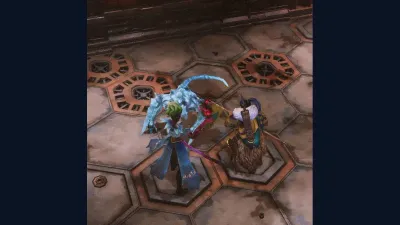
What is this build trying to do?
Begin with repeatable damage and a manageable defensive plan. Add condition interactions only when the hand and equipment support their consequences. Select upgrades that preserve a useful turn even when the preferred condition is absent.
This is a role-based strategy framework. It does not claim to be a verified level-by-level digital card, equipment or perk list. Check the current digital card text before making an irreversible selection.
How do you set up a repeatable turn?
- Count deliberate self-cost and expected incoming damage together.
- Apply the damage or condition interaction only when survival and follow-up are practical.
- Use support or recovery before another resource-building turn becomes lethal.
Make the survival calculation before accepting another source of harm. Coordinate healing and condition handling with the party, and separate deliberate self-cost from avoidable incoming attacks. The class rewards knowing when to stop building the engine.
Which cards should you prioritize?
Use a reliable damage package with one deliberate condition-management plan. Infection Purge’s bottom action is digital-confirmed to be optional, so decide when accepting harm is actually useful. Blood Ritual, Delayed Malady and Wave of Anguish are confirmed cards to inspect as separate pieces; do not assume stacking every negative condition improves them equally. Keep a turn that works when the desired harmful effect is absent.
Compare a candidate card against the job your current hand cannot accomplish: reaching a useful hex, making the primary attack legal, surviving the next enemy action or recovering a disrupted turn. Avoid upgrading a number while losing the only action that keeps the sequence reliable. Exact level selections remain subject to digital Codex verification.
How should equipment and perks support the plan?
Choose survival and recovery for the damage you intentionally accept as well as the attacks you expect. Circlet of Eyes appears in a corrected interaction with Wave of Anguish; inspect the actual target pattern before treating it as a cornerstone. Avoid equipment that merely adds another self-cost without solving survivability.
Last Laugh and The Accustomed are named in digital fixes. Compare the current wording with whether the hand is built to endure harm or spend it aggressively. Pick a perk for the normal case before investing in an exhaustion-related contingency you do not intend to trigger.
What should you change when the plan fails?
Blood Ritual cannot be assumed to permanently remove a condition that another character’s active engine continuously applies. A transfer can also disable a recipient’s beneficial immunity state or change action ordering; read both heroes’ active effects before confirming.
Identify whether the failure was positioning, timing, a resource shortage or a party mismatch before replacing the entire hand. Record a change and test it over another expedition rather than changing several decisions at once.
Which references help with this build?
Start with the Pain Conduit class reference, use party composition to assign allies’ roles, and revisit card economy when the party exhausts before completing its objective.
Evidence boundary: Class alias and broad digital combat role confirmed by publisher announcement; exact 1.0 card text, perks and unlock path require Codex verification. Build is editorial guidance, not hands-on testing.
Sources and version notes
Researched on October 16, 2026 for the digital edition. Strategic recommendations are editorial advice; they are not represented as hands-on testing. Refer to current in-game tooltips when a patch changes an interaction.
- Official Frosthaven announcements and patch notes — Digital: 1.0 features and earlier patch-confirmed names. Historical fixes do not prove current bugs.
- Cephalofair official Frosthaven FAQ — Tabletop ONLY: class mechanics and rules context; not a claim of exact digital implementation
- Frosthaven asset index — Tabletop ONLY: seventeen class names and source asset identification, no digital numeric parity
- Arc Games Legacy of the Algox press release — Digital: Algox update and added classes
- Patch Notes 0.31755 — Primary official digital announcement; historical patch facts require current-version context.
- Patch Notes 0.31984 — Primary official digital announcement; historical patch facts require current-version context.
- Hotfix 0.12.2 — Primary official digital announcement; historical patch facts require current-version context.
- Patch Notes 0.12.1.29652 — Primary official digital announcement; historical patch facts require current-version context.
- Patch Notes 0.31582 — Primary official digital announcement; historical patch facts require current-version context.
- Patch Notes 0.12.29862 — Primary official digital announcement; historical patch facts require current-version context.
- Patch Notes Hotfix 29497 — Primary official digital announcement; historical patch facts require current-version context.
- Patch Notes 0.31273 — Primary official digital announcement; historical patch facts require current-version context.
Gallery
Related Articles
builds
Banner Spear build: Formation captain
A practical Banner Spear build framework: role, turn planning, equipment priorities, perk choices and common mistakes.
builds
Blinkblade build: Tempo skirmisher
A practical Blinkblade build framework: role, turn planning, equipment priorities, perk choices and common mistakes.
builds
Boneshaper build: Sustainable summon line
A practical Boneshaper build framework: role, turn planning, equipment priorities, perk choices and common mistakes.
Was this helpful?
Thank you. You can report a correction through the contact page.