
HIVE build: Adaptive summon network
A practical HIVE build framework: role, turn planning, equipment priorities, perk choices and common mistakes.
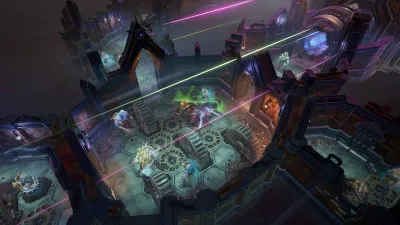
What is this build trying to do?
Start with a small number of useful summons and a mode that complements them. Keep transfer decisions tied to safety and target access. Prefer an engine you can explain clearly over several simultaneous conditional interactions.
This is a role-based strategy framework. It does not claim to be a verified level-by-level digital card, equipment or perk list. Check the current digital card text before making an irreversible selection.
How do you set up a repeatable turn?
- Select an initial mode for the immediate engagement.
- Place useful summons with future transfer positions in mind.
- Before transferring, inspect the destination and the enemy turns that will occur there.
Think of the board as a network of useful summon positions. Choose a mode for the engagement you are actually facing, then protect the units that give you useful transfer options. Reassess the network whenever the party crosses a doorway.
Which cards should you prioritize?
Choose a primary mode and a small summon group with different useful positions. Aimed Assault, Rapid Fire and Code Geminate are all named together in digital interaction fixes, so inspect them as candidates when considering a ranged attack package. Reassemble and Disassemble provide further confirmed card names to review; preserve a plan for rebuilding after a unit is lost rather than filling the hand entirely with initial deployment.
Compare a candidate card against the job your current hand cannot accomplish: reaching a useful hex, making the primary attack legal, surviving the next enemy action or recovering a disrupted turn. Avoid upgrading a number while losing the only action that keeps the sequence reliable. Exact level selections remain subject to digital Codex verification.
How should equipment and perks support the plan?
Inspect whether an item can be used by the character, modifies a summon or merely becomes relevant after Transfer. Circlet of Eyes has a documented interaction with Aimed Assault and Rapid Fire, making it a candidate to review for a multi-target plan when available. It is not proof of an unlimited attack chain.
Overcome is digital-confirmed in condition and Transfer fixes; Adaptive Programming and Regroup also appear in official notes. Choose by the failure you encounter most: condition exposure, transfer flexibility or rebuilding. Verify current point costs rather than copying historical corrected values.
What should you change when the plan fails?
Transfer can move the character into a condition or attack situation previously borne by a summon. Do not use a mode card as though the character were immune to all conditions applied to its units; read the current transfer handling.
Identify whether the failure was positioning, timing, a resource shortage or a party mismatch before replacing the entire hand. Record a change and test it over another expedition rather than changing several decisions at once.
Which references help with this build?
Start with the HIVE class reference, use party composition to assign allies’ roles, and revisit card economy when the party exhausts before completing its objective.
Evidence boundary: Roster name corroborated against tabletop index and digital full-roster announcement; exact digital class text and unlock require Codex verification. Strategy is tabletop-informed editorial advice.
Sources and version notes
Researched on October 16, 2026 for the digital edition. Strategic recommendations are editorial advice; they are not represented as hands-on testing. Refer to current in-game tooltips when a patch changes an interaction.
- Official Frosthaven announcements and patch notes — Digital: 1.0 features and earlier patch-confirmed names. Historical fixes do not prove current bugs.
- Cephalofair official Frosthaven FAQ — Tabletop ONLY: class mechanics and rules context; not a claim of exact digital implementation
- Frosthaven asset index — Tabletop ONLY: seventeen class names and source asset identification, no digital numeric parity
- Patch Notes 0.32181 — Primary official digital announcement; historical patch facts require current-version context.
- Patch Notes 0.11.2.28335 — Primary official digital announcement; historical patch facts require current-version context.
- Patch Notes 0.31273 — Primary official digital announcement; historical patch facts require current-version context.
- Patch Notes 0.31755 — Primary official digital announcement; historical patch facts require current-version context.
- Patch Notes 0.31582 — Primary official digital announcement; historical patch facts require current-version context.
Gallery
Related Articles
builds
Banner Spear build: Formation captain
A practical Banner Spear build framework: role, turn planning, equipment priorities, perk choices and common mistakes.
builds
Blinkblade build: Tempo skirmisher
A practical Blinkblade build framework: role, turn planning, equipment priorities, perk choices and common mistakes.
builds
Boneshaper build: Sustainable summon line
A practical Boneshaper build framework: role, turn planning, equipment priorities, perk choices and common mistakes.
Was this helpful?
Thank you. You can report a correction through the contact page.